
Hi! I’m Cristina. With roots in science and a track record leading strategy and partnerships across biotech, I focus on one thing: identifying breakthroughs that will help make cell and gene therapies mainstream and investing before the world catches on.
Thank you for coming back to read my thoughts. It truly means a lot to me that you’ve continued to follow my writing. This week, I’m sharing a story I’ve come to really love, the story of Violet Jessop, alongside reflections from JPM. As I moved from room to room in San Francisco, I kept thinking about Violet, and how so many people showed up this week in the same way she did, with persistence, curiosity, and genuine love for the work.
I hope you find the story as interesting as I do. Wishing you a healthy, hopeful start to 2026!
The Unsinkable
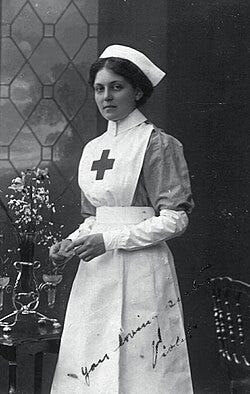
The Japanese proverb “Fall seven times, stand up eight” is often used to describe the quiet, stubborn decision to keep going despite repeated setbacks. Violet Constance Jessop embodied this proverb long before anyone would have used the word “resilience” the way we do today.
Depending on whether you are a glass-half-full or glass-half-empty person, Violet’s life can be read in two very different ways. She was either extraordinarily lucky… or astonishingly unlucky.
Violet was born on October 2, 1887, in the Pampas of Argentina, the daughter of Irish immigrants, Katherine and William Jessop. She was the eldest of nine children, only six of whom survived. As a child, Violet became gravely ill with tuberculosis, then known as “the consumption”, a disease so poorly understood that families often sought “cures” in fresh air, sunlight, and proximity to nature. Violet’s family moved to the countryside in hopes that the land itself might heal her.
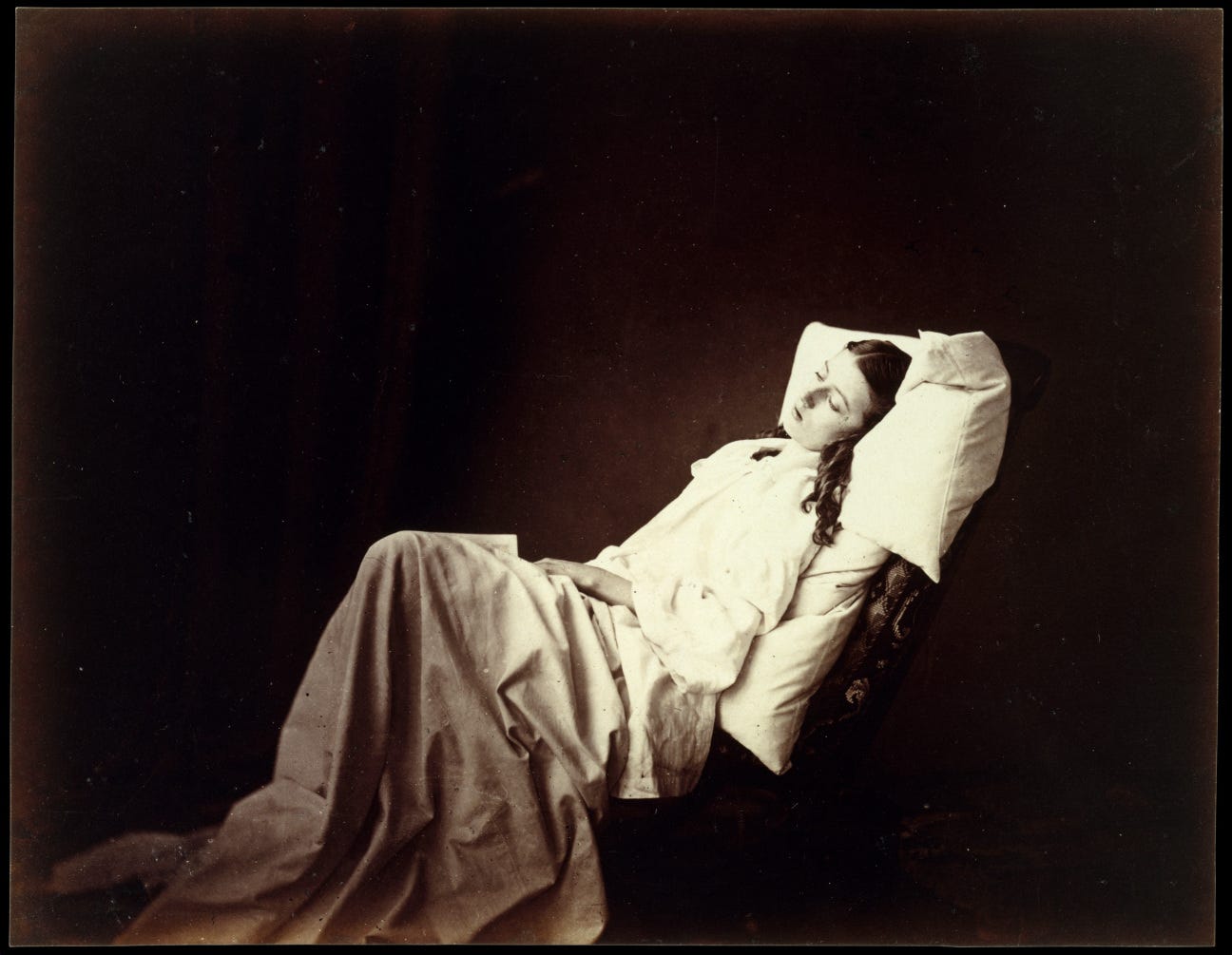
I picture Violet then, frail, thin, face flushed, lying quietly and admiring a simple vase filled with wildflowers from the Pampas. At the time, tuberculosis was strangely romanticized and infected women were portrayed as delicate, ethereal Victorian beauties. The poetry of the illness masked the reality that most people did not survive it. Violet did.
At the age of 16, Violet moved to England with her family.
On September 20, 1911, Violet boarded the Olympic, then the world’s largest ocean liner, proudly described as “unsinkable.” A few hours after departing Southampton, while crossing the Solent (a narrow strait between the Isle of Wight and mainland Britain), the Olympic collided with a Royal Navy warship named the Hawke. The prevailing theory was that the Olympic was so massive that she displaced enough water to pull the Hawke off course. The warship’s reinforced bow, designed to sink vessels, tore two large holes in the liner. Despite the damage, the ship limped back safely to Southampton under the command of Captain Edward Smith. Everyone, including Violet, survived. The label of unsinkable only grew stronger.
And so, on April 10, 1912, Violet, alongside Captain Smith, confidently boarded another White Star liner, the Titanic. I will spare you that story. You already know it. Or at least you have seen the 1997 film that left us all misty-eyed as Rose clung to a wooden board, whispering “I’ll never let go.” What matters here is that Violet Constance Jessop was among the 706 survivors, out of the 2,240 people aboard the Titanic. You’d expect that by then Violet might have developed thalassophobia, an intense fear of the ocean. She did not.
Just four years later, Violet boarded the Britannic, the third and largest sister ship to the Titanic and Olympic, this time serving as a stewardess with nursing duties. Requisitioned as a hospital ship during World War I, the Britannic was considered safer, improved, and more robust than her predecessors. And yet, on November 21, 1916, near the Greek island of Tzia, the Britannic struck a naval mine and sank, killing 30 of the 1,066 people on board. Once again, Violet survived.
Surely, one would think, this is where she chooses solid ground and perhaps, she follows her father’s path as a sheep farmer. But no. Violet continued working at sea, traveling the world aboard various liners until she finally anchored for good in the 1950s. She lived until 1971, passing away at 83, not at sea, but from heart failure. Clearly, Violet was the unsinkable one, not the ships.
If I could meet Violet today (definitely not on a ship!) I would ask her a single question: What kept you going back? I suspect her answer would mirror the one I hear so often from entrepreneurs after countless investor rejections: Because they love what they’re doing.
“The only way to do great work is to love what you do” - Steve Jobs
JPM Reflections
There is no better place to witness people who genuinely love what they’re doing than at the JPM Healthcare Conference. Last week, thousands of us gathered in San Francisco to listen to pitches, exchange ideas, share meals, reconnect with friends and colleagues, make introductions and, perhaps most importantly, to meet other humans face to face.
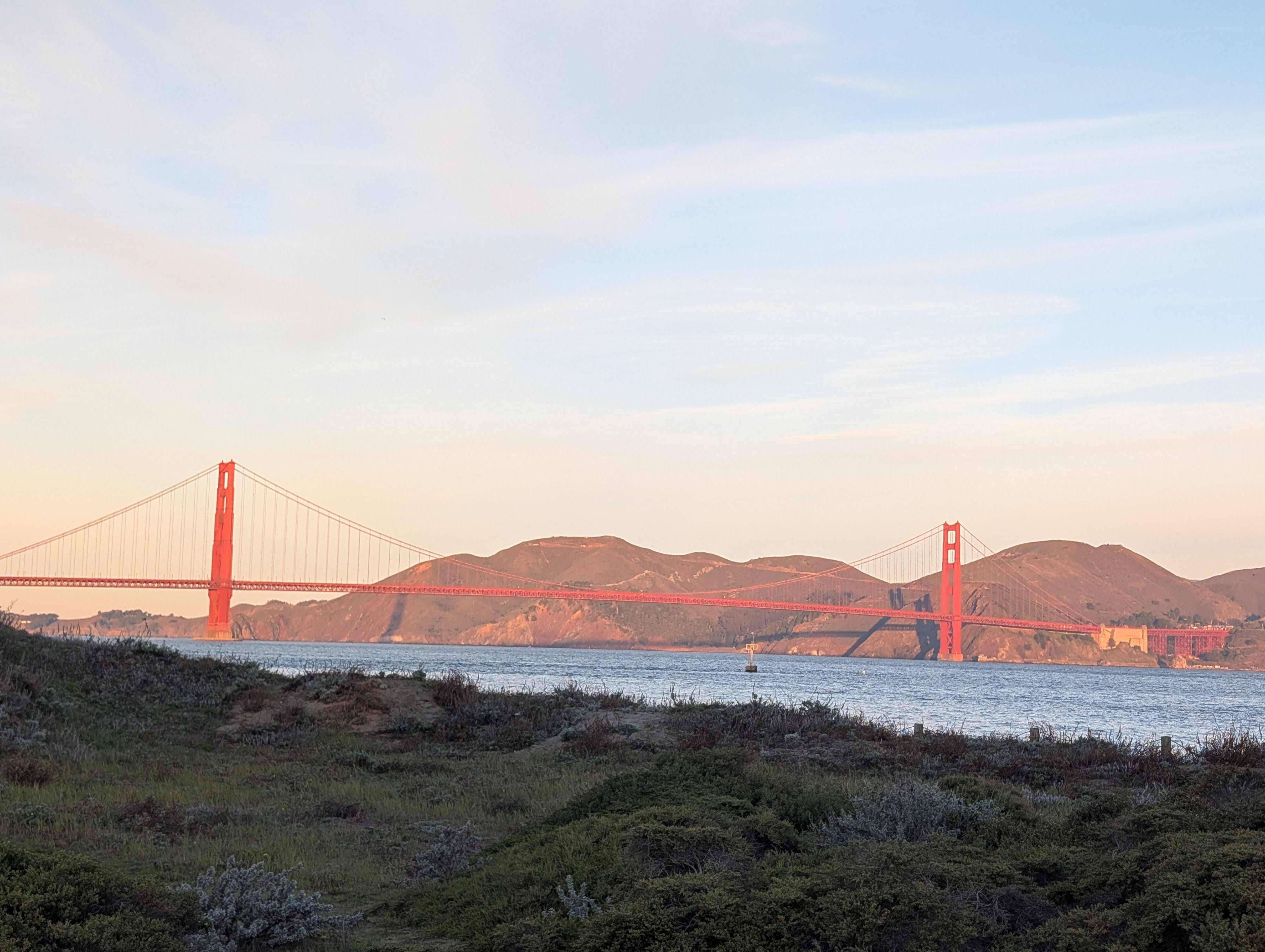
I suspect many of us are now frantically scrolling through notes, highlighting follow-ups, and crossing off “next steps.” But before JPM fades into the rearview mirror, I wanted to pause and share a few reflections while the energy is still fresh.
The day before JPM officially kicked off, I had the privilege of attending Sachs Associates’ 11th Annual Oncology Innovation Forum (OIF), held at the Marines’ Memorial Club. Fun fact: the Marines’ Memorial Club was established in 1946 as a “living memorial” intentionally designed as a place for people to gather, connect, and build community. It felt like exactly the right setting.
Much of the OIF discussion centered on advances in bispecific and multi-specific antibodies for solid tumors. There was comparatively little focus on cell-based therapies (to my disappointment), with the field appearing to place greater emphasis on antibody-drug conjugates. The conversation didn’t meaningfully shift toward cellular therapies until the final panel, the Investor Roundtable. While I found myself wondering whether there was a broader disconnect, I nonetheless left inspired by the energy of aspiring entrepreneurs making authentic connections.
The following day, I attended a similarly structured forum, this time focused on neuroscience. For those of us who have spent time thinking about dementia and other neurodegenerative diseases, and the long history of setbacks in this field, it was genuinely encouraging to see how well attended the meeting was. More than the numbers, there was a palpable sense that disease-modifying treatments may finally be moving from aspiration to possibility.
I had to step out of the neuroscience forum early to make my way to the much-anticipated BioMixer 2026! And it did not disappoint. The team at IndieBio consistently creates an environment that brings out the best in early-stage founders. We listened to a series of one-minute pitches, some delivered by entrepreneurs sharing their ideas publicly for the very first time. There was something uniquely special about that moment, when conviction meets vulnerability and belief arrives before polish.
I will admit some bias. I thought the founders I’ve worked with were among the strongest presenters. That said, I was particularly impressed by the founder of editpep, an early-stage company currently raising its seed round. Their platform is focused on modulating neuronal pathways through a novel delivery technology, with potential applications in diseases such as Huntington’s disease.
One of the most inspiring gatherings of the week was “Bridging the Gap for Greater Investment,” hosted by Preetha Ram, Managing Partner at Pier 70 Ventures, together with the founders of Women X AI (WXAI). If you’re lucky enough to know Preetha, you know she has a rare ability to bring together extraordinary, visionary women in one room with real intention. From health-focused consumer products to AI-powered technologies aimed at improving ovarian disease diagnosis, what I saw on display were founders building incredible companies, generating meaningful revenue, securing external validation, and showing strong traction in their capital-raising efforts.
Over the next couple of days, I spent my time in more intimate, one-on-one conversations at the Biotech Showcase and RESI JPM. These meetings gave me the opportunity to connect directly with founders tackling some of the most pressing bottlenecks in the cell and gene therapy ecosystem, very much my bread and butter. I was impressed by the progress, and I plan to spend the coming weeks thoughtfully reviewing the materials they shared and following up where helpful. For now, I’ll keep those conversations close to my heart but more to come in a future post.
If you have been following the headlines and did not attend JPM, you might be thinking that not much happened. After all, there were no multibillion-dollar deals announced. I can tell you, though, that a great deal happened, far more than I could reasonably cover here without testing your patience. The gravitational pull among all of us in San Francisco felt real. It was Brownian motion in action with smart, curious people suspended in the same space, bumping into one another in ways that appeared random, but were not.
“When you really want something, the universe conspires in helping you to achieve it” - The Alchemist, Paulo Coelho.
I am optimistic that the real impact of JPM will reveal itself in the weeks and months ahead because of what was so palpable throughout the week. The people who showed up to JPM genuinely love what they do. You could feel it in the conversations, in the questions, in the way founders and investors kept leaning back in, even after long days and plenty of no’s.
Much like Violet, biotech entrepreneurs will keep showing up because the work itself is worth returning to. And more often than not, that quiet persistence is what ultimately moves things forward.
If this piece sparked any thoughts, I’d love to hear what stood out to you this JPM. What did you notice, and what are you watching for in the weeks ahead as conversations turn into action? I’m always happy to keep the conversation going or connect you with others working in this field.