
Hi! I’m Cristina. With roots in science and a track record leading strategy and partnerships across biotech, I focus on one thing: identifying breakthroughs that will make cell therapies mainstream and invest before the world catches on.
Thank you for coming back to read my thoughts! It means so much to me that you have kept up with my writing. As the year comes to an end, my hope is to leave you on an optimistic note. This week, I’m reflecting on why the ecosystem behind cell and gene therapies continues to move forward, even in challenging times. Wishing you a healthy, hopeful start to 2026.
The Neighborhood
I was 12 years old when the United States invaded Panama. It was early afternoon on December 19, 1989, and at first, nothing felt out of the ordinary. For months, we had the same rhythm: kids playing and running through the streets with “duros” (homemade fruity popsicles), adults clustered on street corners debating politics and organizing the next protest. It had been a hard year of political unrest, fear, and too many desaparecidos (people who had vanished).
That day, like every day, my dad was wearing all white: white pants, a white shirt, a white hat. Wearing white meant you belonged to la Cruzada Civilista (a visible sign of resistance). He wore it daily. It was how people recognized one another.
My mom got home at her usual time and joined the group outside. We overheard her telling a story that clearly shook her. At a checkpoint, she had passed a large black plastic bag lying on the road. She said it was disturbing and she couldn’t stop thinking about what (or who) was inside. She had been instructed to keep driving, so she did. She drove an old Nissan Stanza, recently painted white as quiet act of protest.
At dusk, as always, everyone went back inside. A toque de queda (curfew) had been in place for months, and no one was allowed on the streets after dark.
A few hours later, something unexpected happened. A neighbor knocked on our door. I didn’t hear what was said, but suddenly our furniture was being carried outside, chairs, tables, anything big. My brothers and I followed. It felt surreal and, at first, almost exciting.
Outside, the entire block was doing the same thing, dragging furniture into the street. They were using the furniture to build barricades, blocking both ends of our small street. We helped by carrying smaller items here and there, even though we didn’t fully understand why. By the end, the barricades stood nearly six feet tall.
Sometime after midnight, once the work was done, we went back inside. All that remained were the beds and mattresses. It was very quiet, and we were sent to sleep, still not grasping how serious things had become.
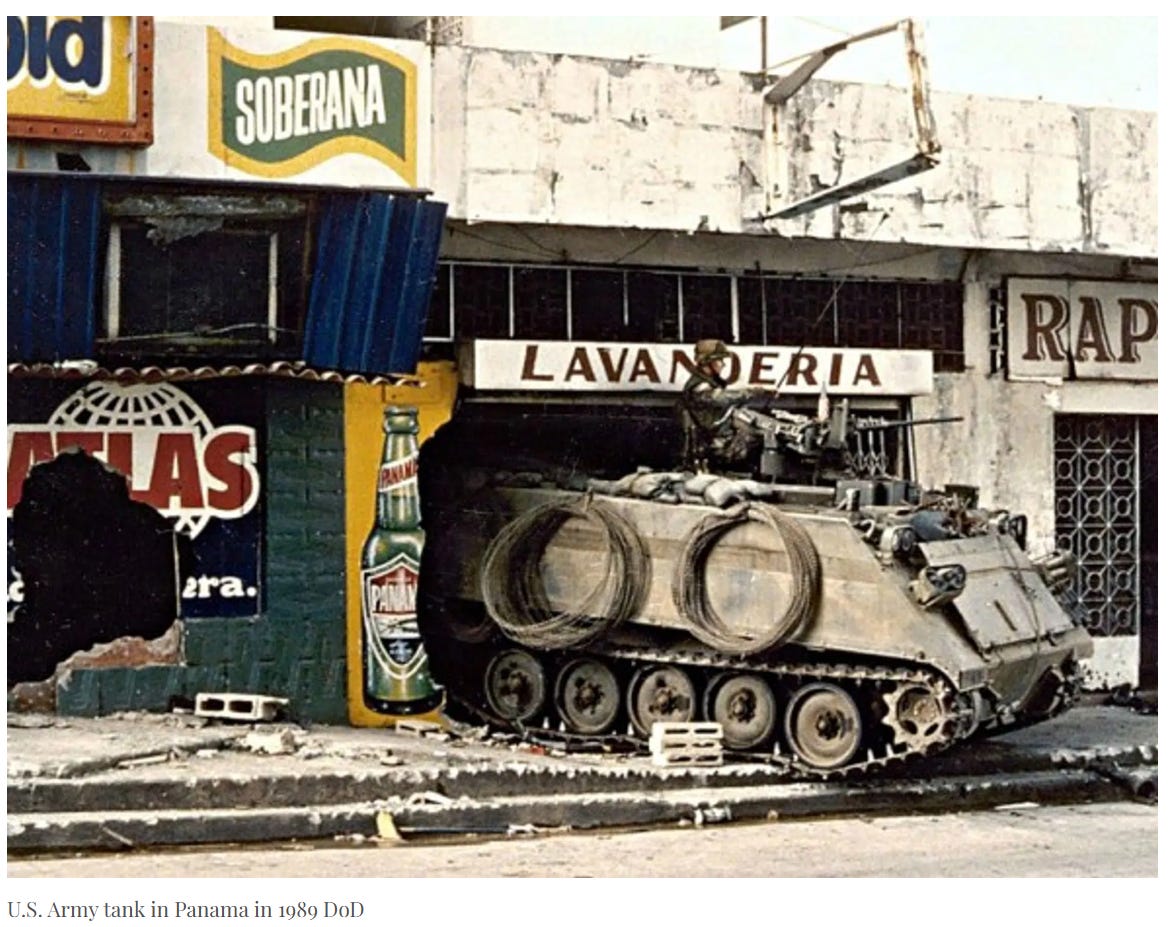
I don’t know how long we slept, maybe a couple of hours. It was still dark when my dad rushed into the room and whispered, “Ya vienen.” (They’re coming.) We looked out the window and saw something I will never forget. An M551 Sheridan tank rolling down our narrow street, crushing the barricade as if it were nothing. My dad ran back into the room, lifted the mattress, and pulled out - of all things - a machete.
Then came the noise. Sirens, explosions, smoke filling the sky. After that, my memory goes blank. No matter how hard I try, I can’t recall what happened next. It’s like that part was erased. The next thing I remember is the late afternoon of December 20. Tanks moving up and down the streets followed by men wearing military gear. Neighbors stopping by with small items, bananas, bags of rice, cans of beans or tuna, mayonnaise, even ketchup?!
I’ve thought about that moment of my father lifting the mattress and pulling out the machete so many times. Even then, I think I understood that he had run out of options. For most of my life, it troubled me that he believed a machete could keep us safe. Only recently did I realize what actually did. It was our neighborhood. The white clothes that signaled “civilian”. The afternoon gatherings that allowed people to organize and feel united. The trust built over time. The shared experiences that fostered empathy, collaboration and belonging. The food passed hand to hand after the bombs stopped. Many people have passed, and many things have changed since those days, but my parents still live in that same house, on that same street, with no intention of leaving.
The neighborhood was the true infrastructure of survival, resilience, exchange, and renewal.
In research and development, it is the underlying ecosystem that plays this role. It is the neighborhood that sustains innovations and ultimately advances therapies that keep people safe from disease. For those of us who have been part of that ecosystem and who have seen potential cures for previously untreatable diseases, there is no intention of leaving.
Why This Ecosystem Still Works
Those of us in the sector know it has been a difficult year. Grants and other sources of non-dilutive funding have contracted sharply, leaving academic labs and small companies to scramble. Venture capital has concentrated heavily around anything labeled “AI,” leaving other programs (some already in the clinic with solid data) without sufficient runway. Layoffs have rippled across the ecosystem.
And yet…
This year has also delivered meaningful progress: FDA approvals, incredible clinical data, thoughtful deals, and other important milestones. As 2025 comes to a close, I want to focus on those outcomes. On what this ecosystem has actually achieved despite the challenges. My hope is that by the end of this review, you see what I see. Progress isn’t always linear, but the foundation is holding, the work continues, and innovation is still very much alive.
There were multiple FDA approvals and label expansions in 2025 (see table below), reinforcing a trend that advanced therapies are continuing their transition from experimental to durable, mainstream treatments. I’ll highlight a handful of examples here.

Skin grafting has been practiced since ancient times (earliest records suggest as early as 1500 BC). Today, it remains the gold standard for treating large burns, chronic wounds, and skin loss due to trauma, infection, or cancer. Typically, skin is taken from a healthy area of the patient and grafted onto the wound.
But this approach does not work for patients with recessive dystrophic epidermolysis bullosa (RDEB). RDEB is characterized by chronic blistering, recurrent wounds, significant pain, and frequent infections. Because of mutations in the COL7A1 gene, patients lack functional type VII collagen, meaning wounds that do not heal.
In April 2025, Abeona received FDA approval for Zevaskyn, lab-generated epidermal sheets derived from a patient’s own cells and corrected to express functional COL7A1. These sheets are transplanted directly onto wound sites. Zevaskyn is designed to be a “one-and-done” definitive fix for the most difficult, chronic wounds. It is an extraordinary achievement.
Of note, Zevaskyn, is the second advanced medicine approved to treat RDEB. While Zevaskyn is an ex vivo cell therapy, there is already an in vivo gene therapy, Vyjuvek, that received approval in 2023. You can learn more about ex vivo vs. in vivo here.
For people diagnosed with macular telangiectasia type 2 (MacTel), a slowly progressive retinal disease, there had been no FDA-approved therapies to slow or stop vision loss. That changed on March 6, 2025.
Encelto is an implanted device containing retinal pigment epithelial cells (RPE cells act as the “caretakers” of the light sensing photoreceptor cells). RPEs within the device produce continuously a therapeutic protein. The capsule is surgically placed into the vitreous of the eye, allowing controlled, sustained delivery of the therapeutic protein and preservation of vision over time.
It is an elegant example of how cell-based approaches can blend biology, engineering, and clinical pragmatism, and how these platforms are maturing.
Earlier this month, the FDA approved Waskyra, the first cell therapy for Wiskott-Aldrich (WAS) syndrome, a rare and life-threatening immunodeficiency that primarily affects boys. Historically, the only therapeutic option available to families was an allogeneic stem cell transplant from a matched donor - an option that many patients never had. From the first clinical studies to regulatory approval, nearly fifteen years have passed. Over that time, the therapy demonstrated durable clinical benefit following a single administration, with patients followed for years post-treatment.
What makes this approval especially notable is who ultimately brought the therapy to market. The scientific roots of Waskyra trace back to the 1990s, when clinicians at the San Raffaele–Telethon Institute for Gene Therapy (SR-TIGET) in Italy began developing the approach. The program was later licensed and advanced by GSK (2013–2018), then transferred to Orchard Therapeutics (2018–2023) - where I had the privilege of working briefly on the project - before returning to Italy in 2023 under the stewardship of Fondazione Telethon.
In a move rarely undertaken by a non-profit organization, Fondazione Telethon assumed full responsibility for development, manufacturing, and regulatory execution, ultimately securing approval in both the United States and Europe. This approval is a reminder that meaningful innovation in cell and gene therapy does not come from a single geography or capital source, but from a global, mission-driven ecosystem that persists, adapts, and delivers for patients when others step away.
Positive Readouts: From Research to the Clinic
Meaningful clinical readouts and real-world data emerged in 2025, reinforcing that the sector remains deep, active, and diverse in its approaches.
Oncology
In my view, some of the most disruptive data this year emerged just weeks ago at ASH 2025.
On the in vivo front, four patients with relapsed/refractory multiple myeloma were treated with a simple infusion developed by Kelonia Therapeutics, designed to generate CAR T cells directly inside the patient. The results were deep responses, a favorable safety profile, strong CAR-T expansion without lymphodepleting chemotherapy, and persistent CAR-T cells in all patients at three months.
These early data are incredibly encouraging and suggest a future where CAR-T therapies could be administered in a standard doctor’s office rather than a specialized center. Kelonia is still early as a company (founded in 2021), but it is already operating on a global stage. Most recently, the company entered into a strategic partnership with Johnson & Johnson to develop next-generation in vivo CAR-T therapies.
At the same time, improvements in ex vivo CAR-T manufacturing continue to deliver meaningful gains. At ASH, AstraZeneca presented clinical data from relapsed/refractory multiple myeloma patients treated with FasTCAR AZD-0120. This platform reduces vein-to-vein time to under 14 days, significantly shorter than first-generation CAR-T approaches. A single infusion resulted in durable responses and CAR-T persistence for weeks. AstraZeneca has since outlined plans to expand AZD-0120 beyond oncology into diseases such as multiple sclerosis and lupus, underscoring how platform improvements can unlock entirely new indications.
Autoimmune Disease
The expansion of CAR-T therapies into autoimmune diseases - often described as an “immune reset” - continued to accelerate in 2025.
Fate Therapeutics has been a leader here with its iPSC-derived, off-the-shelf CAR-T platform (more on induced Pluripotent Stem Cells (iPSC) here). In systemic lupus erythematosus (SLE), a chronic autoimmune disease that disproportionately affects women, Fate reported encouraging data earlier this year. In a small cohort of ten patients, treatment led to effective immune reset with a favorable safety profile. The company is planning to initiate a pivotal study next year, marking a clear step toward potential approval.
SLE affects more than 200,000 people in the U.S., roughly 90% of whom are women, often diagnosed during their childbearing years. Progress in this space would represent a meaningful advance not only for autoimmune disease, but also for women’s health, an area that has drawn increasing attention from investors over the past year.
That said, the company most likely to secure the first approval of a CAR-T therapy for an autoimmune disease is Kyverna Therapeutics. Kyverna was an early pioneer in this space, and its CAR-T therapy (mic-cel) has shown the ability to reverse disability in patients with Stiff Person Syndrome, a rare autoimmune disorder characterized by severe stiffness and painful muscle spasms. Public awareness of this disease increased after Céline Dion shared her diagnosis in 2022, but the scientific groundwork had been laid long before.
Several other companies - Caballeta, Artiva, Cartesian, among others - also reached meaningful clinical milestones in 2025. Taken together, these advances make it increasingly clear that CAR-T is no longer confined to oncology.
Huntington’s Disease
In 2025, neurodegeneration crossed an important threshold from merely slowing disease to meaningfully altering its trajectory. I’ve written previously about cell therapies and neurodegeneration, so I’ll focus here on what I see as the most consequential development of the year: Huntington’s disease.
In the spring, I had the privilege of meeting Therese Crutcher-Marin, President of the Huntington’s Disease Society of America in the San Francisco Bay Area, a patient advocate, and the author of Watching Their Dance. Her book tells a love story shaped by uncertainty, falling in love with her husband while knowing Huntington’s disease had already taken his sisters, and that the same fate might lie ahead. Huntington’s disease is defined by progressive motor, cognitive, and psychiatric decline caused by accumulation of a toxic mutant protein. Until 1993, it could not even be definitively diagnosed. Therese’ story stayed with me.
So, when in September 2025 I learned about uniQure’s progress with their gene therapy showing a ~75% slowing of disease progression, I couldn’t have been more excited for a community that has been working tirelessly toward a treatment for decades. For the first time, meaningful clinical benefit was observed and sustained over a three-year period. uniQure’s therapy is an in vivo gene therapy designed to reduce levels of the toxic mutant protein that aggregates, disrupts, and ultimately kills neurons. The news reverberated across the field, with many anticipating an accelerated path forward.
Since then, unexpected discussions between uniQure and the FDA have introduced uncertainty around approval timing. These conversations have centered on statistical analysis and the appropriate use of an external control arm. What’s important to know is that these discussions do not change the underlying clinical data; though admittedly, they could influence how that data is interpreted within a regulatory framework. That said, this feels less like a scientific setback and more like a potential communication gap.
What has remained unwavering is the strength of the Huntington’s community itself - patient advocates, families, and clinicians actively rallying in support of the program. That collective voice matters, and reinforces my belief that, in the near future, we will see a truly game-changing therapy for people living with Huntington’s disease.
Financing reflects a “high-conviction” market
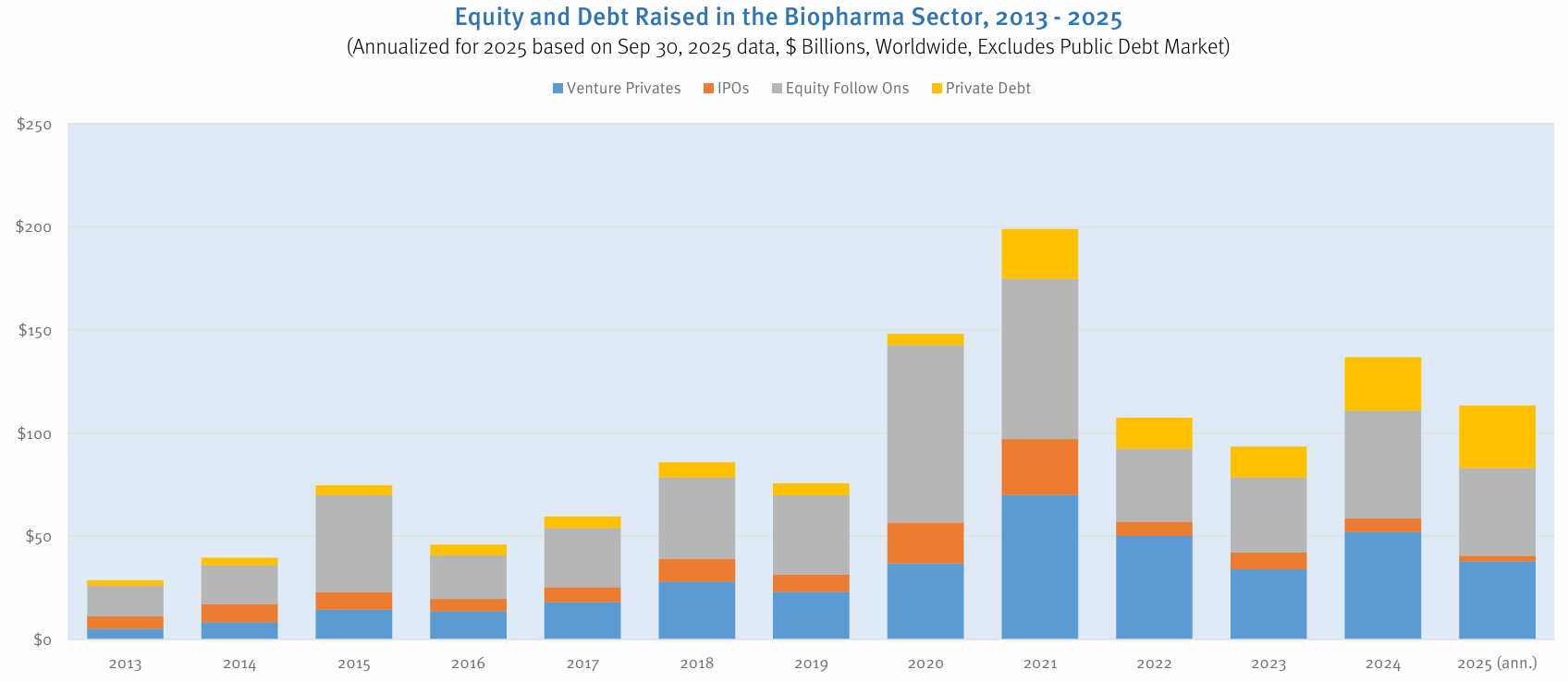
In the world of financing, the landscape for biotech remains nuanced for a variety of reasons I won’t dive into here (see the graph below). However, the silver lining is a wave of high-conviction deals, particularly a strong appetite for advancing in vivo approaches, signals a deep, continued commitment to these advanced therapies. I covered the bulk of these deals in a recent piece, so I’ll focus this section on “hot off the press” activity that is currently moving the needle.
First up is Addition Therapeutics, the high-profile spinout from Kathleen Collins’ lab at UC Berkeley. They are leveraging retrotransposon machinery to build a platform capable of “safer, durable, one-time therapies,” aiming to leapfrog the limitations of current genetic medicine. Addition recently emerged from stealth with a massive $100 million backing from heavy-hitting institutional investors, including the Gates Foundation.
Addition’s tech, dubbed PRINT (Precise RNA-mediated INsertion of Transgenes), inserts new DNA into precise genomic locations using “delivery methods similar to CRISPR-Cas9” (likely a nanoparticle?). The fascinating hook is that the core of their technology, a retroelement, is derived from birds! Even though it’s avian-sourced, humans still possess the specific DNA binding sites that allow this “R2” element to find and insert genes. It is still early days, but the science is undeniably cool.
Another incredibly encouraging milestone is Aspen Neuroscience’s $115 million Series C financing this November. Aspen is doubling down on an autologous approach, using iPSCs derived from a patient’s own skin to generate dopaminergic neurons. Their primary moat (and a massive clinical advantage) is zero immunosuppression.
While the industry is eagerly awaiting their 12-month primary endpoint data, the company has already successfully cleared multiple cohorts in a dose-escalation study with no serious adverse events reported. Most impressively, Aspen is already manufacturing commercial-ready products. If they continue to follow the path blazed by BlueRock, we may see the FDA grant them a “green light” to bypass Phase II and head straight into a pivotal trial.
Final Thoughts
It’s easy to look at global biotech funding trends and feel worn down. There’s no sugarcoating it. 2025 has been a year of pulling back and being more selective, and many mid-sized companies have felt caught in the middle. However, we should view this not as a permanent decline, but a period in which the financing landscape is being reshaped. The reality is that as long as we exist as humans, the demand for better health is the only truly infinite market. History shows us that biotech is uniquely resilient; it is an industry where human progress eventually outweighs the temporary scarcity of capital. We saw this in the post-2008 era, the capital always returns because the “unmet need” never goes away. The deals we’re seeing now suggest that the foundation is being rebuilt for a prosperous 2026.
My hope is that I’ve left you on a positive note or at least with an optimistic view of what is to come. What matters most is this: innovation in our industry will survive, because the ecosystem will choose -again and again- to stay.
If this piece sparked ideas or challenged your thinking, I’d love to hear your perspective. I’m always happy to keep the conversation going or connect you with others working in this field.
This article feels so important right now, as the year comes to a close. It makes one reflect on what unseen infrastructures truly build a community's resilience, doesnt it, Cristina?